Walls That Look Unbroken After Repair
Drywall Repair and Installation in Ellabell for damage that shows through paint and surfaces needing replacement
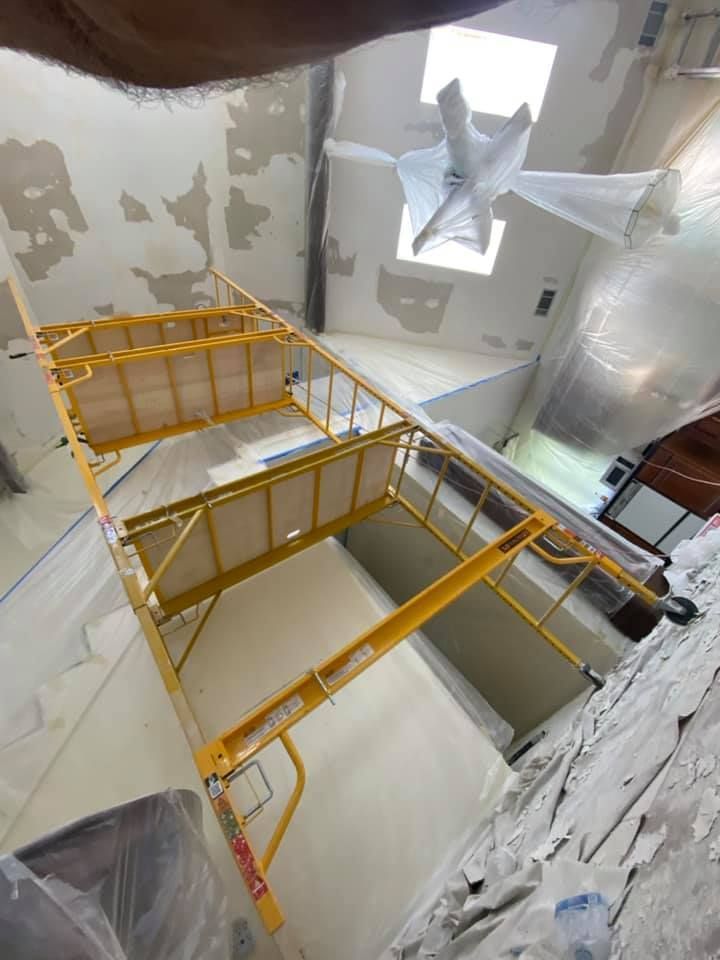
Holes from removed fixtures, cracks along seams, and water-damaged sections create visible flaws that remain obvious even after repainting if the underlying drywall isn't properly repaired. Castle Painting & Construction handles drywall repair and new installation for residential and commercial properties in Ellabell, restoring smooth, paint-ready surfaces that blend seamlessly with existing walls. The work ranges from patching small punctures to replacing entire sections compromised by moisture or impact damage, with each approach selected based on the extent and cause of the damage.
Repairs involve cutting out damaged material, securing new drywall to framing, and applying joint compound in multiple coats that are sanded progressively smoother between applications. The final surface must be level with surrounding areas and free of ridges or depressions that would show through paint. New installations follow the same finishing process but often include entire rooms or additions where walls are being built from framing.
Schedule an inspection and estimate to evaluate your wall condition and determine the appropriate repair approach.
What Seamless Blending Actually Accomplishes
Proper drywall finishing creates a surface where repaired areas are indistinguishable from original construction once painted, which requires matching the existing texture and ensuring the repair sits flush with the surrounding wall plane. Joint compound shrinks as it dries, so multiple thin coats perform better than one thick application that cracks and creates a hump. Sanding between coats removes tool marks and feathers the edges so no visible transition line remains.
Once the repair is complete and painted, you see a continuous surface with no shadowing, ridges, or color variation that marks where the damage was located. Running your hand across the wall reveals no texture change or edge, and light hitting the surface at an angle shows no depressions or humps. The wall accepts paint uniformly without the repaired area appearing shinier or flatter than adjacent sections.
Drywall work often pairs with interior painting since both require similar surface prep and finishing skills. Properties undergoing remodeling typically include drywall repair to address damage exposed during other work, and new construction or additions require complete drywall installation before any finish painting can begin. Moisture-damaged drywall must be fully replaced rather than patched, since the paper facing loses structural integrity once wet and will continue to deteriorate even after drying.
Answers to Frequent Service Questions
Drywall decisions depend on the type and extent of damage and what caused the problem originally.
What determines whether drywall needs repair or replacement?
Damage confined to the surface layer can be patched with joint compound, but holes larger than six inches or any water damage that has softened the gypsum core requires cutting out and replacing the affected section. Trying to patch severely damaged drywall results in repairs that fail within months.
How many coats of joint compound are needed for invisible repairs?
Most repairs require three coats minimum—an embedding coat to fill the damage, a second coat to level the surface, and a finish coat that feathers the edges. Each coat must dry completely and be sanded smooth before the next application.
Why does drywall repair need to happen before painting?
Joint compound must cure fully and be sanded smooth to create a paint-ready surface, and any texture matching must be completed before primer goes on. Painting over improperly finished drywall highlights every flaw and creates a surface that looks obviously patched.
When should texture be matched versus leaving the repair smooth?
If surrounding walls have orange peel, knockdown, or other texture, the repair must be textured to match or the smooth patch will stand out visually. Smooth walls throughout the room allow smooth repairs that blend after painting.
What causes drywall cracks to reappear after repair?
Foundation settlement, framing movement, or improper joint treatment during original construction all create stress that reopens cracks. Properties near Ellabell with sandy soil often experience settling that requires addressing the structural cause before cosmetic repairs will hold long-term.
Castle Painting & Construction coordinates drywall repair and installation with painting services to deliver finished interiors ready for occupancy or use. Request a consultation to review your wall condition and discuss the scope needed to achieve smooth, durable results.