Garage Floors That Handle Shop Work
Epoxy Flooring in Ellabell for garages and workshops exposed to chemical spills and heavy equipment
Oil drips, solvent spills, and dragged toolboxes destroy untreated concrete within a few years, leaving stained, pitted surfaces that collect dust and moisture. Castle Painting & Construction applies epoxy coatings to garage and workshop floors throughout Ellabell, creating a sealed surface that resists automotive fluids, cleaning chemicals, and the abrasion from rolling equipment. The coating bonds directly to properly prepared concrete, filling surface pores and creating a non-porous barrier that prevents liquids from penetrating and weakening the slab.
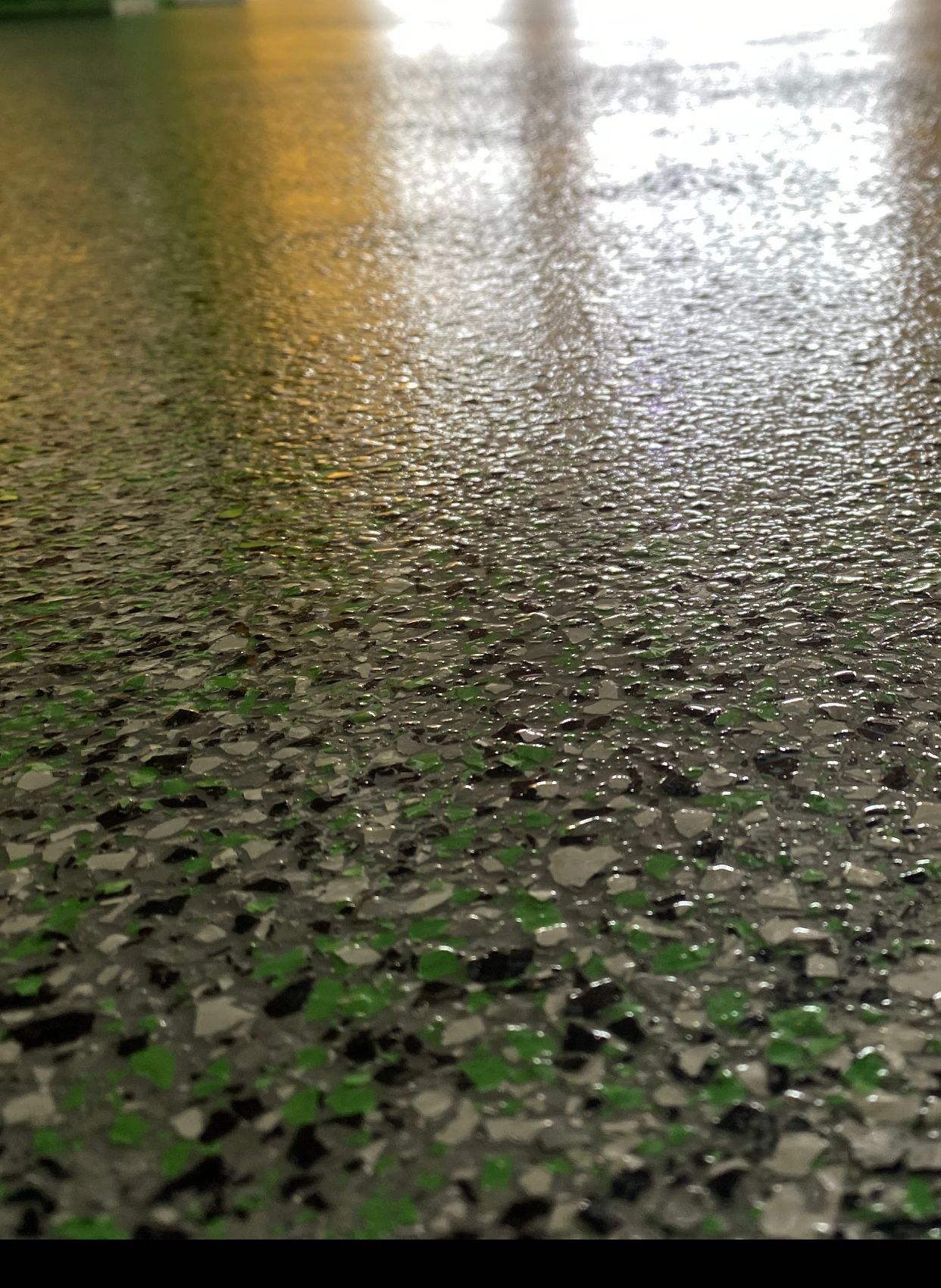
Surface preparation involves grinding the concrete to open the pores and remove any existing sealers or contaminants that would prevent adhesion. The epoxy is then applied in multiple coats, with broadcast chips or textured additives mixed in to provide slip resistance and hide minor imperfections. Cure time depends on ambient temperature and humidity, both of which affect how quickly the chemical cross-linking completes.
Request a free estimate to assess your concrete condition and coating requirements.
How Epoxy Coatings Stop Surface Degradation
Epoxy works by forming a chemical bond with the concrete surface rather than simply sitting on top like paint, which peels when moisture vapor pushes up from below. Proper grinding exposes aggregate and creates a profile that allows the epoxy to lock into the surface mechanically while the chemical bond develops. Without this step, the coating delaminates within months, especially in high-moisture environments common near coastal Georgia.
After the epoxy cures, you see a uniform gloss or satin finish depending on the topcoat selected, and liquids bead up rather than soaking in. Sweeping removes loose dirt without stirring up concrete dust, and oil spills wipe clean without leaving permanent shadows. The floor no longer sheds grit or develops the powdery surface residue that untreated concrete produces as it weathers.
The coating performs well in both residential garages and light commercial workshops, though commercial applications may require additional coats or higher-solids formulations to handle forklift traffic or constant loading. Decorative color flakes can be broadcast into the wet epoxy to add texture and visual interest, or the finish can remain clear to showcase the natural concrete color beneath.
Answers to Frequent Epoxy Questions
Epoxy coating decisions often involve trade-offs between appearance, slip resistance, and durability under specific use conditions.
What makes epoxy different from standard concrete paint?
Epoxy creates a chemical bond with the concrete and cures into a hard, non-porous surface, while paint sits on top and peels when exposed to moisture or abrasion. Epoxy also resists chemical damage that dissolves or stains paint within weeks.
How long does the floor need to cure before use?
Most epoxy formulations allow light foot traffic after twenty-four hours, but full chemical resistance and hardness develop over seven days. Vehicle traffic should wait seventy-two hours minimum, and longer in cooler temperatures or high humidity typical in Ellabell during certain seasons.
Why does surface preparation cost more than the coating itself?
Grinding equipment, dust extraction, and crack repair account for the majority of labor and material expense, since improper prep causes coating failure regardless of epoxy quality. Skipping this step to reduce cost guarantees premature delamination.
When should a garage floor be recoated?
If more than twenty percent of the surface shows wear-through to bare concrete, or if delamination has started at the edges, a full recoat is needed. Spot repairs rarely blend well and often fail faster than the original coating.
What texture options prevent slipping on smooth epoxy?
Broadcast silica sand, aluminum oxide, or decorative color flakes into the wet epoxy to create a textured surface that provides traction even when wet. The topcoat seals the texture in place while maintaining the chemical resistance of the underlying layers.
Castle Painting & Construction handles epoxy flooring for both residential and light commercial properties, with project scope tailored to the specific use conditions your floor will face. Schedule an on-site evaluation to review concrete condition and discuss finish options.